
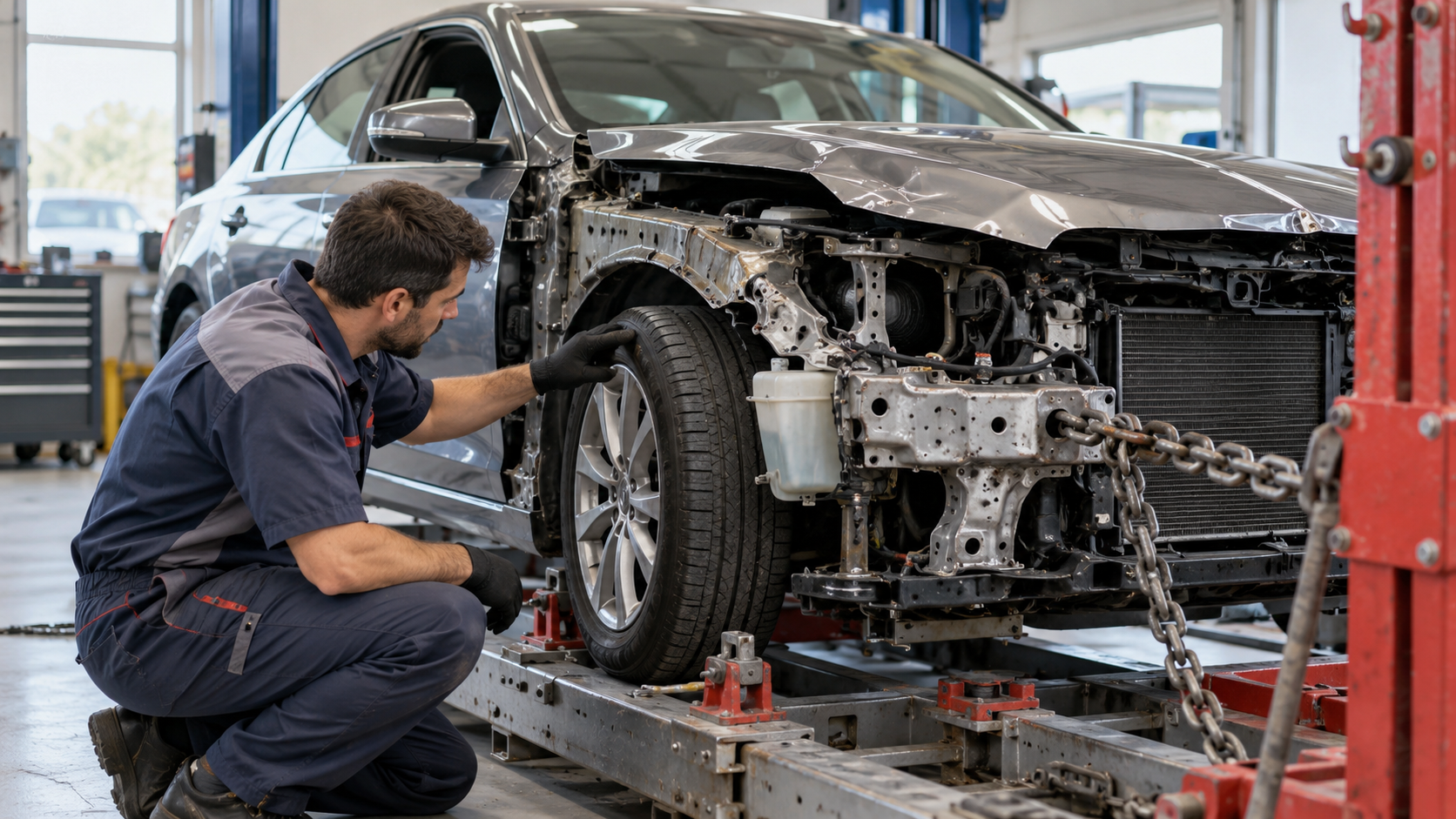
A serious collision can damage much more than the visible body panels of your vehicle. The force of an accident can affect the underlying structure, potentially leaving you with a bent car frame that changes how the vehicle drives, aligns, and protects its occupants. This often leads drivers to ask, can a bent car frame be fixed, or does structural damage mean the vehicle is beyond repair? In many cases, professional collision repair technicians can straighten or repair a damaged frame, but the appropriate solution depends on the location and severity of the damage, the vehicle’s construction, and manufacturer repair requirements.
Understanding what frame damage means and how it is evaluated can help you make sense of your repair options after an accident. Below, we explain what causes frame damage, the warning signs to watch for, how professional frame straightening works, and when replacement or more extensive structural repair may be necessary.
Example of a Bent Car Frame
The frame or structural foundation of a vehicle is designed to provide strength, support major components, and help manage collision forces. Depending on the vehicle, this structure may consist of a traditional body-on-frame design or, as is common with many modern passenger vehicles, an integrated unibody structure.
A bent car frame occurs when collision forces deform part of this underlying structure. Damage may range from relatively localized distortion to significant structural movement affecting multiple areas of the vehicle.
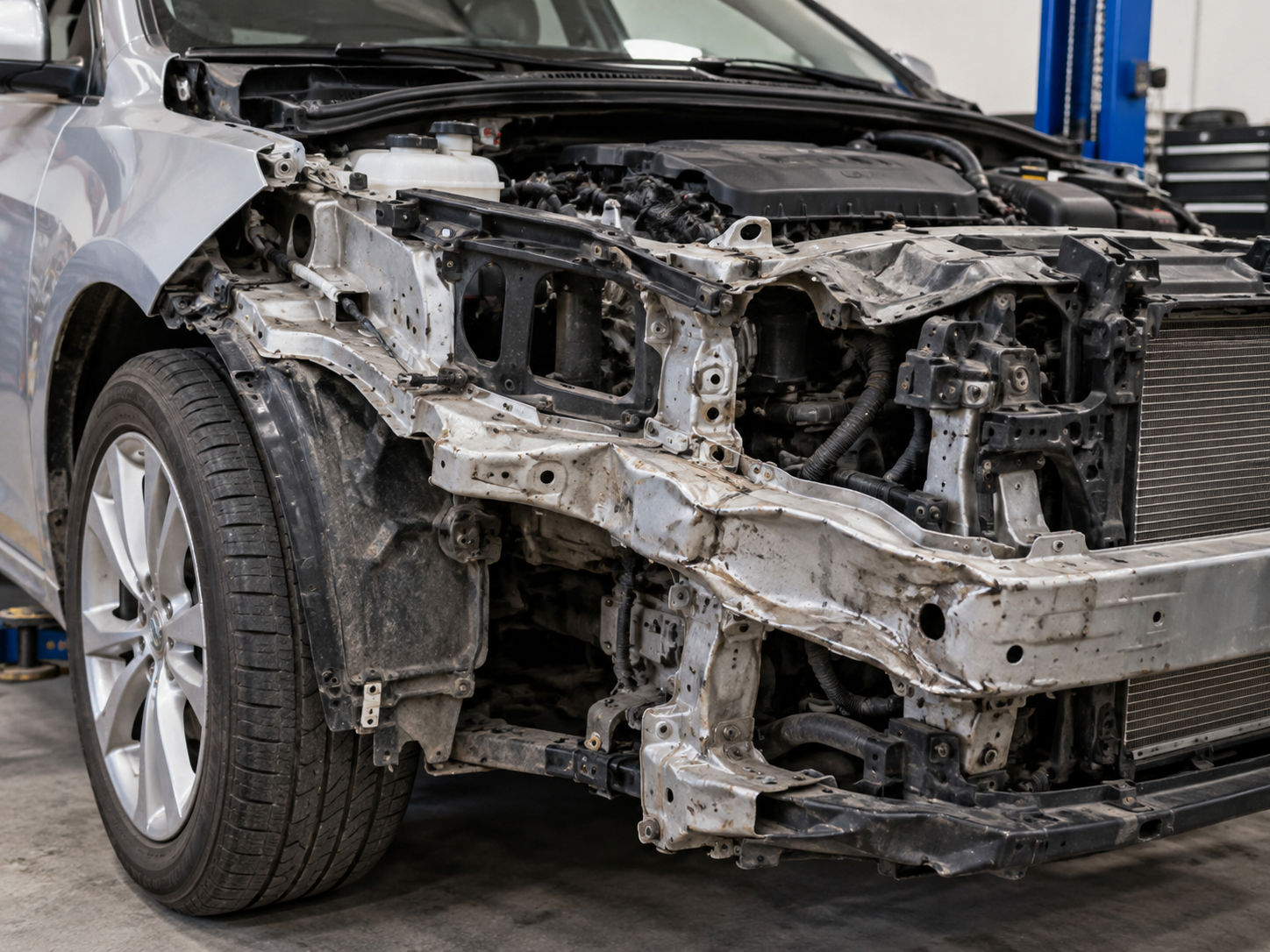
Frame damage can occur after:
- Front-end collisions
- Rear-end accidents
- Side-impact crashes
- High-speed collisions
- Rollovers
- Impacts with curbs, barriers, or large objects
- Accidents involving significant suspension or wheel damage
Because structural problems are not always obvious from the outside, a professional collision inspection may be necessary even when exterior damage appears relatively limited.
Can a Bent Car Frame Be Fixed?
Can a bent car frame be fixed? In many situations, yes. Professional collision repair facilities have specialized equipment designed to measure damaged vehicle structures and, when appropriate, return affected areas to manufacturer specifications.
Whether repair is possible depends on several factors, including the severity and location of the damage. A slightly displaced structural section may require controlled straightening, while severely crushed, torn, or compromised components could require partial replacement.
Technicians must also consider the manufacturer’s repair procedures. Modern vehicles frequently use combinations of high-strength steels, aluminum, and other specialized materials that have specific repair requirements. Certain structural components may be approved for straightening, while others must be replaced after particular types of damage.
The goal is not simply to make the vehicle look straight again. A proper structural repair should restore the vehicle according to appropriate specifications so that its body, suspension, safety systems, and other components can function as intended.
Common Signs of a Bent Frame on Car Structures
A bent frame on car structures is not always easy to recognize without professional measurements. However, certain symptoms after a collision may indicate that the vehicle has sustained structural damage.
Potential warning signs include:
- Vehicle pulling noticeably to one side
- Steering wheel sitting off-center
- Uneven or unusually rapid tire wear
- Doors, hood, or trunk no longer lining up correctly
- Visible gaps between body panels
- Wheels that appear improperly positioned
- Suspension alignment problems
- Unusual noises while turning or driving
- Visible wrinkles, bends, or distortion underneath the vehicle
- Difficulty maintaining a proper wheel alignment
These symptoms do not automatically mean that the frame is bent. Suspension, steering, wheel, and body-panel damage can produce similar problems. A professional collision inspection can determine the actual cause.
How Is Car Frame Damage Diagnosed?
Determining whether structural damage exists involves much more than looking underneath the vehicle for a visible bend. Professional collision repair technicians assess the vehicle as a complete structure.
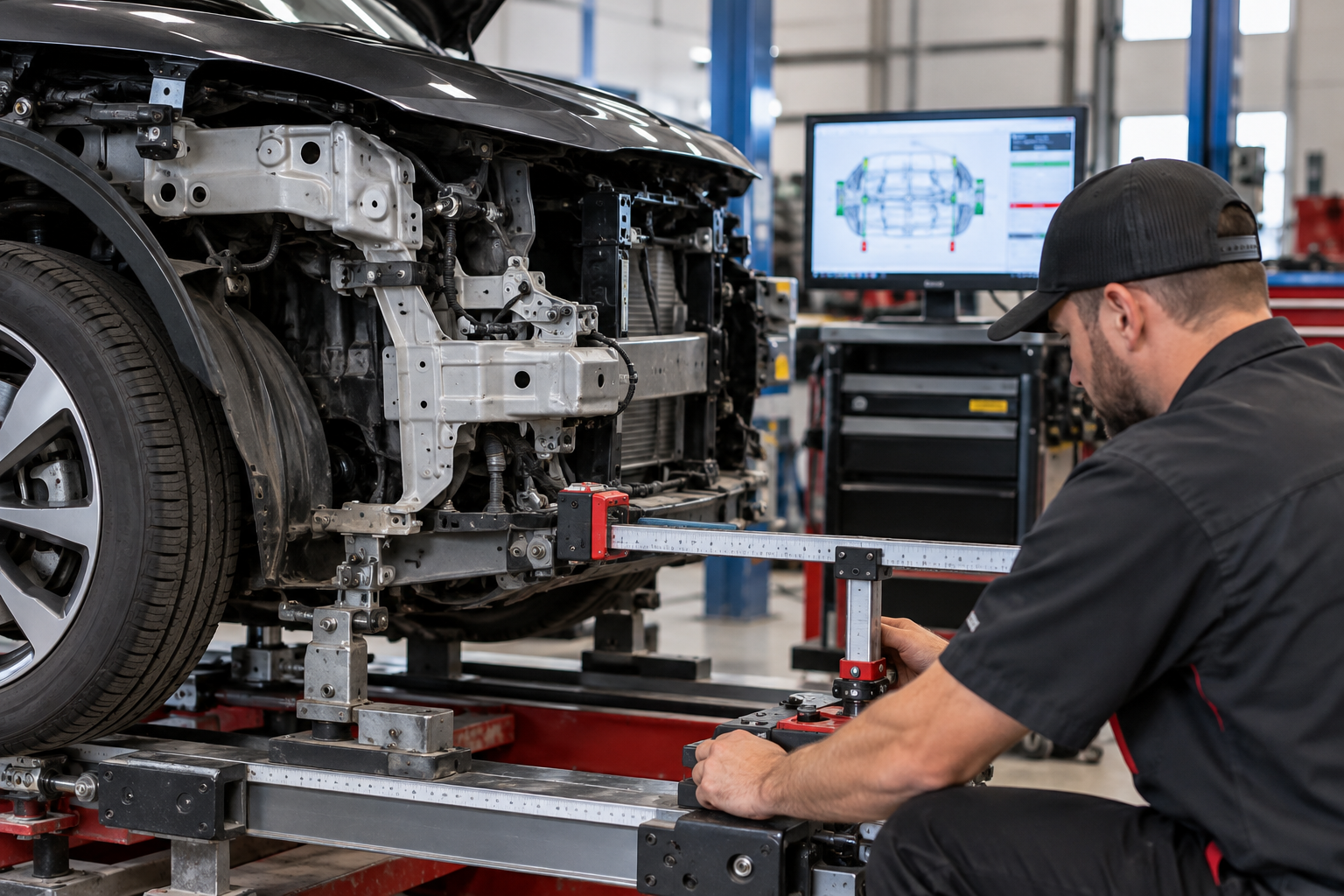
The diagnostic process may include a visual inspection of damaged areas, measurements of structural reference points, evaluation of suspension mounting locations, and comparison with manufacturer specifications.
Computerized measuring equipment can help technicians identify structural movement that might not otherwise be visible. Measurements are particularly important because relatively small changes in structural geometry can affect how body panels, suspension components, wheels, and other parts align.
Modern collision repair may also involve diagnostic scanning. Because many vehicles contain electronic safety and driver-assistance technology, identifying collision-related problems can require evaluating electronic systems in addition to repairing physical damage.
How Professional Car Frame Straightening Works
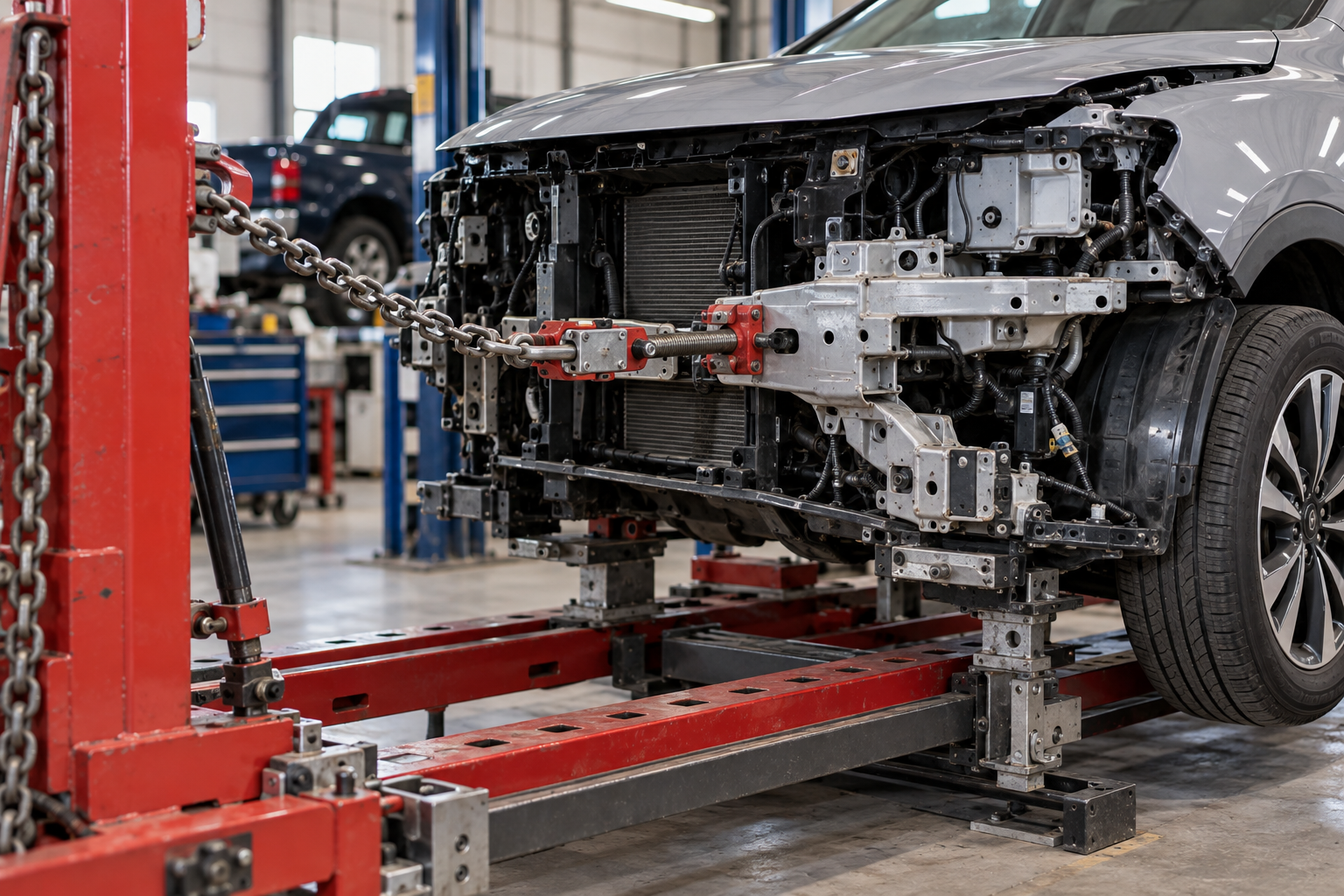
When straightening is permitted and appropriate for a particular damaged area, technicians may secure the vehicle to specialized frame equipment and apply controlled force to the affected structure.
Rather than simply pulling on a visibly bent section until it appears straight, professional structural repairs rely on precise measurements throughout the process. Technicians compare the vehicle’s structure against appropriate specifications and carefully correct damaged areas.
A typical frame repair process may involve:
- Initial Damage Inspection: The collision damage is evaluated to identify visible and potential structural problems.
- Structural Measurements: Reference points are measured and compared with vehicle specifications.
- Repair Planning: Technicians determine which structural areas can be straightened and whether any components require replacement.
- Controlled Frame Straightening: Specialized equipment is used to apply carefully directed force to damaged areas when approved repair procedures allow it.
- Structural Component Replacement: Components that cannot or should not be straightened may be removed and replaced according to manufacturer procedures.
- Measurement Verification: The repaired structure is checked again to verify its positioning.
- Reassembly and Alignment: Suspension, body panels, and other components are reinstalled and properly aligned.
- System Checks and Calibration: Depending on the vehicle and repairs performed, diagnostic scans and ADAS calibration may also be necessary.
Every collision is different, which is why proper inspection and repair planning are critical before structural work begins.
Does a Bent Car Frame Always Need to Be Straightened?
Not necessarily. “Frame repair” can describe several different types of structural work.
Some damaged structural sections can be straightened when the vehicle manufacturer permits that repair method. Other components may need to be replaced rather than straightened, particularly when the material has been severely deformed or the manufacturer specifies replacement following a collision.
A complete repair could therefore involve a combination of straightening, structural component replacement, welding or joining procedures, panel replacement, suspension repair, refinishing, and electronic system calibration.
The correct approach should be based on the vehicle’s specific damage rather than a one-size-fits-all repair method.
Is It Safe to Drive a Car With a Bent Frame?
Driving a vehicle with suspected structural damage should generally be avoided until it has been professionally inspected. A damaged structure can potentially affect more than the vehicle’s appearance.
Depending on the location and severity of the damage, a bent frame may contribute to problems involving:
- Steering
- Wheel alignment
- Suspension geometry
- Tire wear
- Body-panel alignment
- Doors or closures
- Vehicle handling
- Safety system positioning
A vehicle that appears drivable immediately after an accident can still have hidden structural or mechanical damage. Having the vehicle inspected before returning to normal driving is the safest approach.
What Happens When Frame Damage Is Too Severe to Straighten?
Not every bent car frame should simply be pulled back into position. Severe damage may require structural sections to be replaced, depending on the manufacturer’s procedures and the condition of the affected material.
Repair technicians consider factors such as:
- Where the structural damage occurred
- How far components moved from their original positions
- Whether the metal is kinked, torn, cracked, or crushed
- The type of structural material involved
- Manufacturer repair restrictions
- Whether critical mounting points are affected
- The extent of surrounding mechanical and body damage
In cases of extensive damage, an insurance company may also determine that the cost of restoring the vehicle exceeds its value and declare it a total loss. That decision is different from determining whether a structural repair is technically possible.
Why Professional Frame Damage Repair Matters
Structural collision repairs require precision because the affected areas provide the foundation for many other components of the vehicle. Simply improving the vehicle’s outward appearance does not necessarily address underlying damage.
Professional frame repair helps ensure that:
- Structural measurements are evaluated correctly
- Appropriate repair procedures are followed
- Suspension and wheel mounting points are properly positioned
- Body panels align correctly
- Damaged structural components are identified
- Related electronic systems are inspected when necessary
- The completed repair receives appropriate quality checks
For these reasons, structural collision damage should be evaluated by trained professionals with the equipment and technical information needed to repair modern vehicles.
Professional Frame Damage Repair at Craig’s Collision Center in Philadelphia
Craig’s Collision Center is a family-owned auto body shop located at 4925 Van Kirk Street in Philadelphia, PA, serving local drivers since 1979. Our certified collision center provides comprehensive collision and auto body repair for all makes and models, from dent repair and precision color-matched refinishing to extensive post-accident restoration. We use factory-correct repair methods, advanced diagnostics, and ADAS calibration as part of our commitment to restoring vehicles to pre-accident condition.
If an accident has left you with a bent frame on car structures or you suspect hidden structural damage, our team can professionally assess the vehicle and determine the appropriate repair approach. Our frame damage repair services are designed to address collision-related structural issues with careful measurements and proper repair procedures. We also work with all insurance carriers, provide assistance with towing and rental arrangements, and back our repairs with a lifetime warranty.
Get a Free Estimate for Bent Car Frame Repair in Philadelphia
So, can a bent car frame be fixed? Many damaged vehicle structures can be professionally repaired, but the right solution depends on the extent of the collision damage and the manufacturer’s approved repair procedures. Having the vehicle properly inspected is the first step toward determining whether straightening, structural component replacement, or another collision repair method is needed.
If your vehicle was involved in an accident and you are concerned about a bent car frame, contact Craig’s Collision Center in Philadelphia today. Our experienced team can inspect the damage, explain your repair options, and develop an appropriate plan for restoring your vehicle. Contact Craig’s Collision Center today to request your free repair estimate.